
 Let's Record Your Thoughts
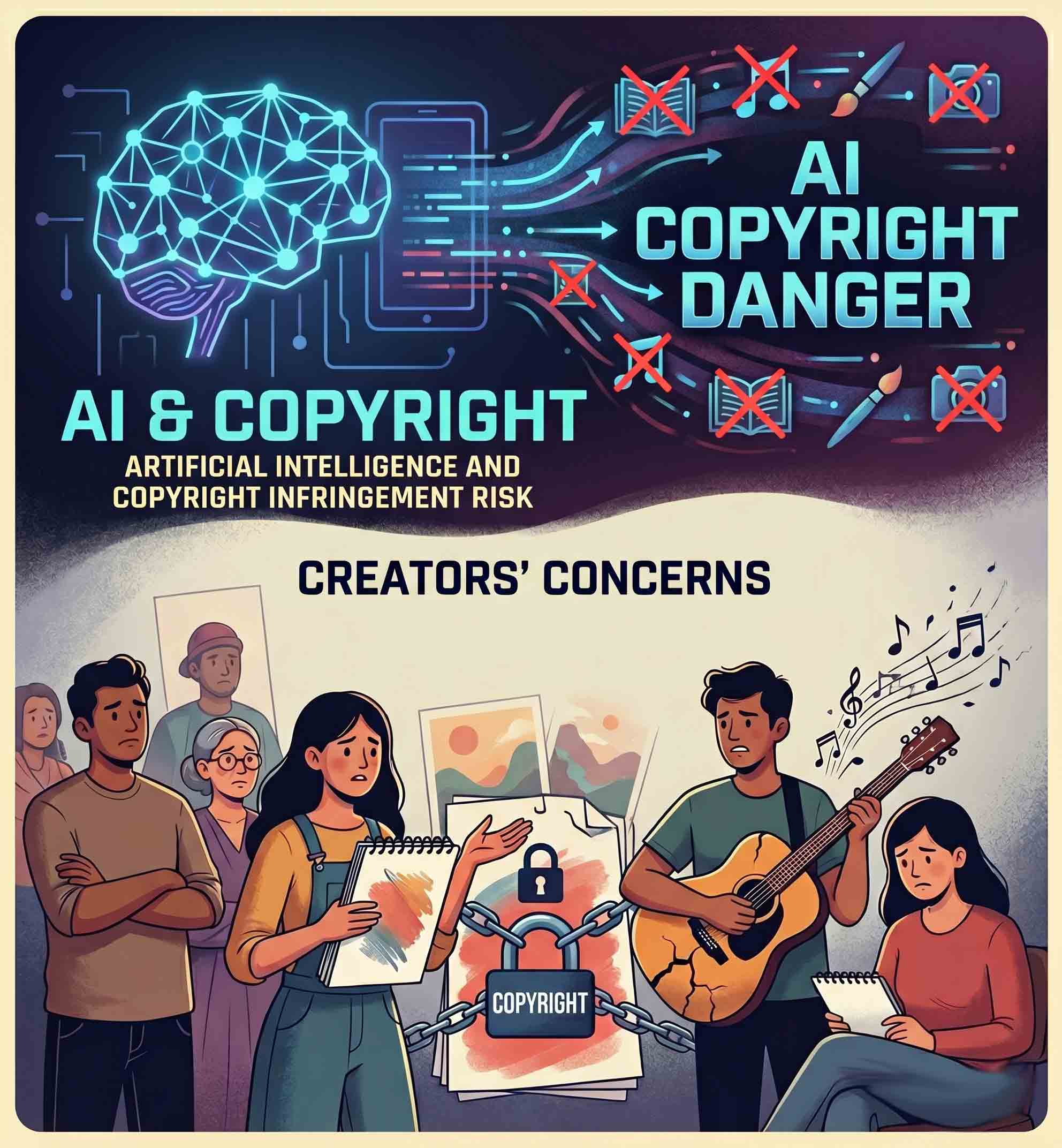
- Ai voices copyright
- AI Voices vs. Human Voices: Comparison
- 1. You Cannot Copyright AI Voices—or Your Own Content
- 2. A Fragmented Legal Minefield
- 3. Mechanical Quality Can Destroy Brand Trust
- 4. Unintentional Identity Theft
- 5. Creative Communities Are Fighting Back
- 6. The “Burden of Suspicion”
- Protect Your Brand with Voice Over Mehak
Ai voices copyright
The rise of AI-generated voices has taken the digital media world by storm. For content creators, businesses, and production houses, the promise of text-to-speech software seems like an easy shortcut to cut costs and speed up production.
AI Voices vs. Human Voices: Comparison
| Feature / Criteria | AI Voices | Human Voices |
| Turnaround Time | Ready within minutes. | Equally fast—delivered in minutes to a few hours! |
| Voice Uniqueness | Average; limited distinct variations. | 13,000+uniquely distinguishable and authentic voices. |
| Emotional Range | Flat and robotic; very low emotional depth. | Infinite!Complete mastery over natural feelings, tone, and expressions. |
| Direction Experience | Frustrating; rigid and difficult to tweak. | Delightful; easy to collaborate with and guide to your exact needs. |
| Pricing / Cost | Requires recurring subscriptions and extra credits. | Starting at approx. ₹2,100 onwards(Based on $25 flat rate). |
| Satisfaction Guarantee | No refunds or guarantees provided. | 100% Money-Back Guarantee!Completely risk-free. |
| Legal Risk | High Risk.AI tools might unknowingly steal or infringe upon a real artist’s voice. | Zero Risk.Fully authentic, safe, and legally compliant. |
| IP Ownership | None.Copyright laws do not recognize or protect AI-generated content. | Full Ownership.You get total copyright and intellectual property control. |
Would you like to expand this into a promotional pitch or a social media post?
But before you click “generate” on your next video, podcast, or commercial, it is critical to look beneath the surface. Using synthetic, AI-generated voices carries severe legal, financial, and brand risks. These aren’t theoretical worries—they are causing real, costly legal battles and PR disasters for companies right now.
Here is why relying on AI voices could be the riskiest decision you make for your business, and why authentic human voiceovers remain irreplaceable.
1. You Cannot Copyright AI Voices—or Your Own Content
The biggest trap of AI audio is intellectual property (IP) law. According to the U.S. Copyright Office and international legal frameworks, copyright protection strictly requires human authorship.
The law is clear: if a machine determines the expressive elements of an output, it cannot be copyrighted. The U.S. Copyright Office explicitly states:
“When an AI technology determines the expressive elements of its output, the generated material is not the product of human authorship. As a result, that material is not protected by copyright…”
What this means for you: If you use an AI voiceover for your YouTube Shorts, Instagram Reels, corporate videos, or audiobooks, your final content may have zero legal protection. Competitors can rip your audio, re-upload your videos, or steal your assets, and you will have little to no legal ground to stop them. From the moment you publish, your intellectual property is entirely exposed.
2. A Fragmented Legal Minefield
The legal landscape surrounding AI is incredibly unstable. In high-profile lawsuits like Lehrman & Sage v. Lovo, professional voice actors have sued AI companies for using their voice recordings to train synthetic models without explicit consent.
While copyright law is still catching up, courts are increasingly turning to Identity Rights and Common Law Rights of Publicity to protect actors. Because these laws vary wildly by country—and even by state—global brands are operating without a safety net.
If an AI company you use gets sued for unethical data scraping, or if the voice you generated accidentally infringes on a real person’s identity rights, your business could face costly legal claims and immediate takedown notices.
3. Mechanical Quality Can Destroy Brand Trust
At the end of the day, audience engagement relies on genuine human connection. When AI voices fall short—sounding robotic, flat, or emotionally disconnected—it reflects poorly on your brand.
Even tech giants aren’t immune to the backlash. When Amazon rolled out AI-generated English dubs for the popular anime series Banana Fish on Prime Video, the response from fans and industry professionals was immediate outrage. The performances were widely slammed as emotionless text-to-speech junk that ruined the viewing experience. Facing a massive public boycott from viewers and voice actors alike, Amazon quietly pulled the AI dubs entirely.
If a multi-billion-dollar company like Amazon can’t make AI voices sound acceptable to a passionate audience, small businesses and independent creators face an even steeper uphill battle. Audiences see right through AI; they interpret it as a cheap shortcut that disrespects their time and attention.
4. Unintentional Identity Theft
AI voice-cloning technology works by mimicking the unique characteristics of a human voice. However, courts are beginning to treat unauthorized voice replication as a misappropriation of human identity—even if the software didn’t directly steal copyrighted files.
If you generate a voice that sounds too close to a well-known personality or an actor who never gave their consent, you open yourself up to severe liability. Navigating these personality laws globally is nearly impossible for creators, making every synthetic voice a hidden legal gamble.
5. Creative Communities Are Fighting Back
When an AI system recreated the French dubbing voice of Hollywood actress Angelina Jolie without the original voice artist’s permission, the localization industry called it a direct ethical and contractual betrayal.
The pushback from creative professionals is organized, powerful, and growing. Across the globe, voice acting unions and associations are successfully petitioning governments to enforce strict consent laws, transparent AI labeling, and fair compensation. Choosing to use AI voices means aligning your brand against the very creative communities that bring media to life. For businesses that depend on industry reputation and goodwill, the public backlash simply isn’t worth it.
6. The “Burden of Suspicion”
Once a brand becomes known for using synthetic AI tools, it loses the benefit of the doubt. Even if you do everything right, you risk facing public accusations of data scraping or uncredited voice theft.
A former radio broadcaster famously accused Google of unauthorized voice scraping for an AI assistant. Even though Google denied it, the public relations damage was already done. When you build your brand on synthetic content, suspicion follows you.
On the flip side, maintaining a 100% human-voiced policy gives you total peace of mind. There are no ethical grey areas, no copyright loopholes, and no clouds of doubt to manage.
Protect Your Brand with Voice Over Mehak
Your videos, commercials, and digital content deserve an authentic, legally secure, and emotionally powerful presentation. Don’t risk your brand’s reputation or legal safety on unpredictable algorithmic code.
At Voice Over Mehak Recording Studio, we provide fully cleared, high-performance, professional human voiceovers. Get absolute legal certainty, brilliant emotional delivery, and authentic human connection that keeps your audience coming back.
Contact Voice Over Mehak Today to book real professional talent for your next project!
- Latest bollywood News: Box Office Analysis, Mega projects, and Star Updates (2026 Edition)

- Dhurandhar 2: A Global Blockbuster Hits a Speed Bump in Japan
- The Hidden Legal and Reputational Risks of AI Voices: What Content Creators Need to Know
- Why Indian AI voice Dataset Projects are the New Digital Gold ?
- Shah Rukh Khan in Jawan 2: The Evolution of Voice, Age, and Authority
- Latest Bollywood News: Star Updates, Releases & Gossip Unveiled!
- Dhurandhar 2 Review : Cast, Dubbing Secrets & Voice Performance Breakdown (2026)
- After Sunil Grover, Sandeep Salwann Emerges as a Remarkably Accurate Aamir Khan Mimicry
- Ranbir Kapoor vs Ranveer Singh: Who Has the Better Voice?







Leave a Reply